Timing Is Everything (Almost)
The very first step in harvesting corn is knowing when is the appropriate time to start harvesting. The window for harvesting most corn varieties is small so it is important to get the timing right. There are several cues that you can go by to ensure that it is time to harvest. First, the corn silks will dry up right before it is time for harvesting. So if the corn silks are not dry, you automatically know that it is not yet time to harvest. Secondly, if you check the corn ears, you can get a better idea whether it is ready to be harvested. When the corn ears are fully expanded, the corn is read for harvesting. The corn ears should have a rounded shape - not a pointed shape. Finally, if you need further assurances that your corn is absolutely ready for harvesting, you can pull back the husk and ascertain whether the ear looks well filled. You can prick a kernel of corn with a fingernail to see if the corn liquid is watery or milky white. If the corn liquid is white, the corn is not ripe and therefore not ready for harvesting. On the other hand, milky cork liquid indicates you are absolutely ready for harvesting.
The Need for Speed
Once you have picked your corn, it is best to eat or store it as quickly as possible. This will ensure that the corn does not have time to deteriorate, as the deterioration process starts immediately after picking. Deterioration involves a process whereby the corn's natural sugars are converted into starch. So if you are not going to immediately eat your corn you will need to slow down the deterioration process by blanching the corn. Blanching simply means placing the corn in boiling water for about five minutes. Once you have blanched the corn, it is imperative that you quickly process your corn for storage and there are a number of tools that can help you in that regard.
One of the most helpful corn processing tools is a corn cutter gadget such as the Lee's Corn Cutter. The Lee's Corn Cutter and Creamer is the best wood corn cutter on the market. And it is much less expensive than a typical electric corn creamer. It utilizes a sharp, specially engineered corn cutter blade that is capable of cutting corn kernels cleanly or cream style. Alternatively, you may find the Thomas Corn System, an electric corn creamer, to be more convenient and faster. Electric corn creamers are a convenient way to handle the almost all of the corn processing steps, including shucking the corn. Electric corn creamers typically require the use of a household drill and involve inserting the corn cob into a specially designed plastic tube where the corn is spun. This spinning process is separately used to remove the shuck and corn kernels.
Once you have processed your corn, you should now store it. Because corn loses it sugars at a much slower pace when stored at lower temperatures, we refrigerating your corn. For longer term storage, the best option is freezing in a vacuum sealer or canning. If you are not a home canner, though, you will obviously need to buy canning supplies.
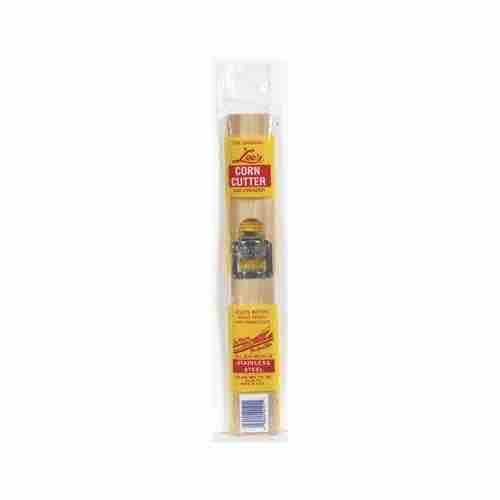 |
| Lee's Corn Cutter |
One of the most helpful corn processing tools is a corn cutter gadget such as the Lee's Corn Cutter. The Lee's Corn Cutter and Creamer is the best wood corn cutter on the market. And it is much less expensive than a typical electric corn creamer. It utilizes a sharp, specially engineered corn cutter blade that is capable of cutting corn kernels cleanly or cream style. Alternatively, you may find the Thomas Corn System, an electric corn creamer, to be more convenient and faster. Electric corn creamers are a convenient way to handle the almost all of the corn processing steps, including shucking the corn. Electric corn creamers typically require the use of a household drill and involve inserting the corn cob into a specially designed plastic tube where the corn is spun. This spinning process is separately used to remove the shuck and corn kernels.
Once you have processed your corn, you should now store it. Because corn loses it sugars at a much slower pace when stored at lower temperatures, we refrigerating your corn. For longer term storage, the best option is freezing in a vacuum sealer or canning. If you are not a home canner, though, you will obviously need to buy canning supplies.
Trust us when we tell you, you will enjoy your corn harvest by taking the above steps to make sure it remains fresh.
.

No comments:
Post a Comment